Changing Places: Life and Sound in South East London
Words: Ruby Lott-Lavigna
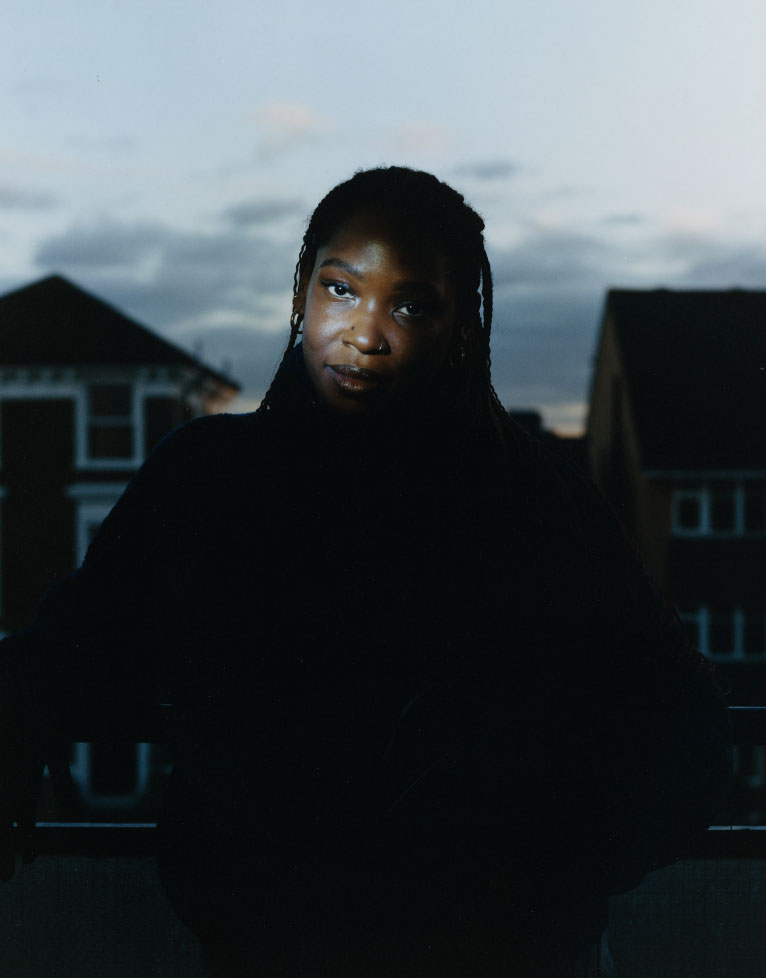
Photos:
- OK Williams by Guarionex Rodriguez, Jr.
- Ojerime by Amy Peskett
- Bradley Zero by Hannah Burton
Ruby Lott-Lavigna speaks to three of GALA’s South East London artists about how their music relates to the place they call home.
London is in a state of flux. Blocks of flats emerge out of nowhere. Clubs become Tescos. A pandemic turns a bustling city centre into a ghost town. Your favourite record store disappears. A new record store appears alongside a small plates restaurant and a deli. A festival is cancelled. People leave, people return. Cycles repeat themselves as the city changes its face.
When it comes to South East London, and in particular Peckham – the home of GALA festival – that change has been ongoing. It was here in 1795 that poet and artist William Blake had visions of an angel on the Rye. It’s where one of London’s largest clubs, Lazerdrome, existed by night as an emblem of 1990s rave culture, and by day as a Lazerquest. It’s where grime, nu-jazz and electronic musicians have been born and moulded, streaming through the airwaves of pirate radio. Like most of London (and the UK), complex economic factors have impacted the demographic of the area, alongside a pandemic that threatened nightlife and hospitality. But today, as we emerge bleary-eyed into a year of parties, dinners, lateral flow tests, offices and festivals, the busy streets of South East London, lined with boxes of bright red scotch bonnet chillies and glowing Morley’s signs, are coming back to life.
Bradley Zero, DJ and founder of the record label and night Rhythm Section, has been around long enough to witness the area’s ebb and flow. Having moved there from Leeds in 2008 during his Fine Art undergraduate degree, Zero’s early memories of South East London are of squat raves, art parties and thriving local radio. It all started on South City Radio and throwing parties at Canavan's pool club. In 2014, Zero launched the Rhythm Section label. His musical career has always moved in tandem with the South East – one of Rhythm Section’s first releases, an iconic percussive album carefully melding jazz, hip-hop and house by Al Dobson Jr., was named after Peckham’s main road, Rye Lane.
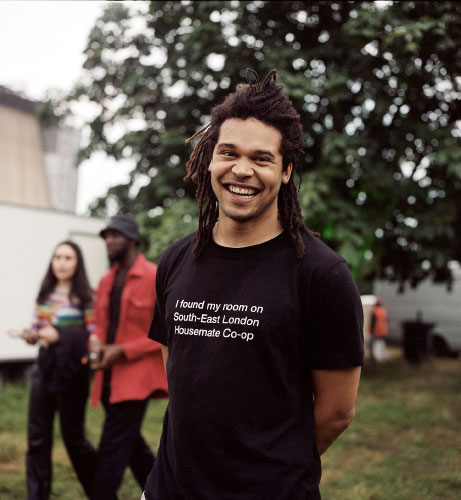
“When I moved down here, I was connected to creative people from all walks of life: people who I could see myself in, people who were doing things that I wanted to do, people who looked like me, people who looked different to me,” he tells me, speaking from his flat in East Dulwich. “It was just a real eye-opener. I felt more at home than I had ever felt, and it shifted a lot of things into perspective.”
“It just felt right,” he adds. “I was immediately taken in by the people in the area, but then [I] also got to build my own community around the thing that I do. It felt like a very exciting dynamic.”
As Peckham’s popularity grows, increasing investment in the area risks changing it for the worse. “You have the double-edged sword of a place being the victim of its own success,” he says of Peckham. “Somewhere becoming a destination and a recognised cultural hotspot [where] you get the negative aspects of prices rising, people commodifying it, money-driven enterprise coming from outside to exploit what's happening inside and then bringing more people in who aren't connected to what's going on. It's this endless cycle.”
Zero’s not wrong. After the financial crash in 2012, house prices in Peckham were some of the fastest to rise. In 2021, the average cost of a property in the area has more than doubled since 2012, according to Land Registry data. All the while, council-backed developments appear, accused of fuelling gentrification rather than halting it. If London’s asset driven property market and profit hungry developers weren’t enough to damage an area, there was always the pandemic. With the uncertainty facing businesses, much-loved venues closed down, including the aforementioned pool bar Canavan's.
“I can’t think of [a solution] other than some form of rent control,” says Zero, “so that an area can still flourish, but it doesn't have to [cause] a wholesale turnover of inhabitants.”
“You definitely see South London change really subtly,” Kanyin Williams tells me. “Actually, I don't know if it is that fucking subtle.”
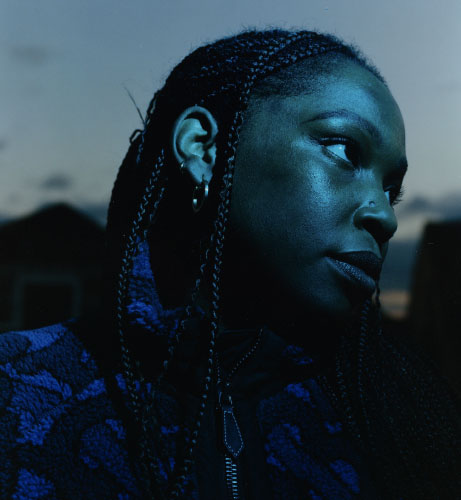
Williams, who DJs as OK Williams, plays energy filled sets that boisterously transition from hard techno to pop to drill. She moved to the area after dropping out of uni and a short stint back at her parents’ in Luton. As a result, Williams’ musical career has been moulded in the cracks and pavements of South East London, her “spiritual home”. She remembers an iconic New Year’s Day gig early on in her career at The Rising Sun, a former pub turned club/studio and living space, playing, er, as the sun rose. “My fucking set started at 8am and went on till 10am [and] it was incredible,” she says. “It was amazing. There was this girl crawling on the floor, having some sort of out-of-body experience.”
It’s fitting Williams mentions The Rising Sun. It’s a venue that encapsulates the struggle facing musicians in South East London. In the midst of the pandemic, residents – mostly artists and musicians – were faced with an eviction notice after their landlord decided to sell. Ever since, the tenants have been fighting to turn the creative space into a cooperative, bringing it under not-for-profit collective ownership and ensuring the residents can continue to live there without the risk of eviction or rent increases.
“I think the greatness of South London is that there's such a prominent music scene, but there are so many different music scenes [within that],” says Williams. “When I was learning how to DJ, I was hanging out with my friends who liked electronic music. But then there were other producers that made lots of hip-hop, R&B and jazzy stuff. I was really fortunate to meet and mix with loads of people that were doing so many different things with music. [It’s] just a big melting pot.”
The area’s musical diversity is one that suits Williams’ style behind the decks: “I feel like the way I DJ is really indicative of who I am and what I like, because I am so interested and moved by loads of different things, scenes and cultures,” she says. “I love electronic music but that's not where my love of music began. I love hip-hop. I love R&B. I love drill and trap. I love pop music. I love fucking ambient music. I love indie rock, I love indie shit. I just love so many different types of music. When I DJ, I try to show that.”
While South East London’s electronic music scene draws crowds, it’s not the only genre growing here. Ojerime, an R&B artist originally from Brockley, is a local in ascendance having released her much awaited mixtape, B4 I Breakdown, in 2020.
"The lyrics [and] the melodies that I adopted for my music [are] from just being somebody who's grown up listening to grime in South East London,” Ojerime tells me. “Though it's not directly infused in my music, I've definitely seen that it's had an impact on my vernacular, and things I'm able to say in my music.”
Ojerime’s smooth vocal lines and soft trap beats evoke a time of lipgloss in the back of a car with early 00s pop blasting through the radio. It’s a sound she’s picked up through a patchwork of influences: “My journey to music was pretty much hearing it around the house growing up, in the car, at parties,” she says. “Listening to my dad's CDs in the car and in the house – it was like a fusion of hip-hop, R&B, a bit of reggae, [and] a bit of original Nigerian Afrobeat music.”
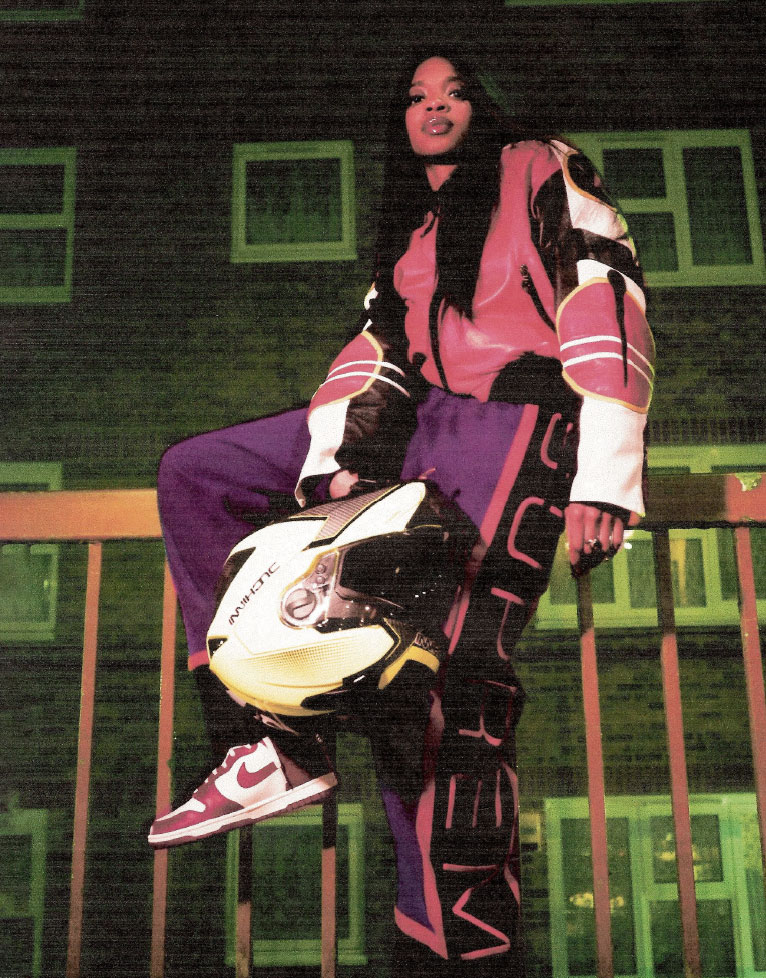
As a child of the South East, the changing nature of the area has stood out to Ojerime. “I feel like some businesses that have opened are not in the interest of Peckham,” she says. “There's been a lot of changes in restaurants and businesses that are opening up, but none of them are really in favour with the people in the area.”
Despite the changes in the area, not all hope is lost – especially when there’s a strong sense of musical community. “I love living in South East London,” says Williams. “There are so many sick musicians that live really close to me. It's really nice that I can easily see them and that we can collaborate really easily. I love living in this area. I always say: ‘I will live in South East until I die.’”
Not one to throw around the word community lightly, Zero has complex feelings on the area’s change. ‘Are we at a lull?’ I think to myself after our chat. Will the Foxtons and natural wine bars kill all that’s good with Peckham? After our call, he sends me a message. “I think amidst all of the doom and gloom of gentrification and the endless cycle of being pushed further and further out of the centre I forgot to kind of express how almost triumphant and incredibly poignant it was to have the big return from the lockdown happen in, essentially, my backyard,” he says, referring to GALA’s 2021 festival. “Even for the first year of GALA – being able to literally push a shopping trolley of my equipment to the festival site just felt special. GALA felt like it was for us, for the locals.”
The changing face of South East, and London as a whole, can be hard to resist. Gathering with kindred spirits around culture, especially music, can be one way to offset the rampant individualism at the root of a city’s downfall.
“There are so many creative people living and working around here, you know?,” says Zero. “People always find a way in London. That is the story of the city.”